

Okanlomo of Yorubaland and the Renewed Promise of Youth Leadership
T
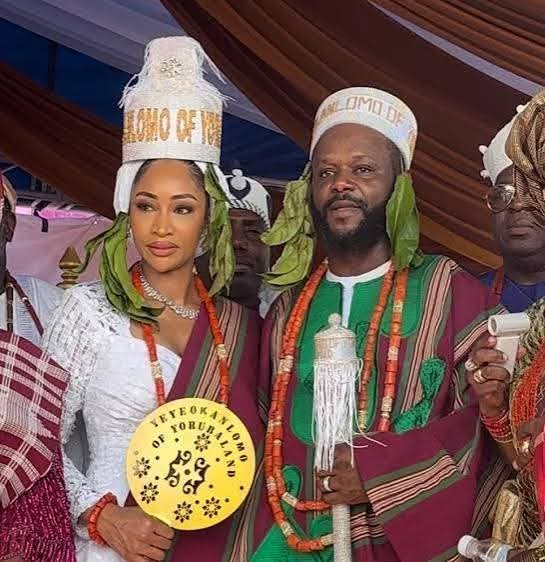
The coronation of Oluwaseyi Tinubu as Okanlomo of Yorubaland is more than a ceremonial bestowal of a chieftaincy title; it is a powerful statement about generational transition, cultural continuity, and the place of youth in the leadership architecture of Yorubaland.
Conferred by His Imperial Majesty, Oba Akeem Owoade, the Alaafin of the Oyo Empire, the title speaks to a deeper intention beyond pageantry.
For many in Lagos State, the recognition of Seyi Tinubu by the Alaafin is received with pride and appreciation. It reflects a symbolic bridge between Oyo, the historical nerve centre of Yoruba civilization, and Lagos, the modern nerve centre of Nigeria. The decision to honour a young Lagos indigene underscores the idea that service, commitment, and impact—not age alone—remain valid pathways to recognition in Yorubaland.
What makes this moment particularly significant is the message it sends to the younger generation.
In a society where chieftaincy titles are often reserved for older elites, the installation of a youth-focused figure as Okanlomo reinforces the belief that young people who dedicate themselves to humanity can earn respect within traditional institutions. It quietly challenges outdated norms and opens the door for a more inclusive cultural future.
The Alaafin’s decision to also install Senator Abdulazeez Yari from northern Nigeria as Obaloyin of Yorubaland further broadens the meaning of the occasion. It reflects an intentional gesture of national unity and mutual respect, mirroring historical alliances between the Yoruba people and northern emirates. Such actions remind us that traditional stools can still serve as instruments of cohesion in a diverse nation.
The presence of Lagos indigenes and cultural elements such as the Eyo masquerade at the Oyo Palace added depth to the celebration. It was not merely about titles but about shared heritage, mutual respect, and collective pride. For a young man to receive such honour in the presence of revered Yoruba chiefs and influencers is both a privilege and a call to greater responsibility.
The Alaafin’s firm assertion that only the Oyo throne holds the authority to bestow titles of Yorubaland significance is a timely intervention in the ongoing distortion of Yoruba history. By clarifying this at the coronation, Oba Owoade reaffirmed the historical and cultural primacy of the Oyo Empire while cautioning against the casual misrepresentation of Yoruba traditions.
Cultural expression also played a vital role in reinforcing the weight of the moment. The performance by Fuji icon, Dr. King Saheed Osupa, went beyond entertainment; it was education through music. His lyrical tribute reaffirmed the uniqueness of the Alaafin’s throne and reminded all present that the Oyo crown stands apart in Yoruba history.
Seyi Tinubu’s journey, however, remains the central conversation. Seen by many as a youth mobiliser and humanitarian, he has often operated independently of his father’s political influence. His focus on empowering young people and encouraging leadership among Nigerian youths aligns with the spirit of the Okanlomo title, traditionally reserved for vibrant, service-driven individuals.
Ultimately, this coronation strengthens the cultural and political bonds between Oyo, Lagos, and the wider Yorubaland. By restoring the youth-centred essence of the Okanlomo title, Oba Owoade has set a standard worthy of emulation.
If Seyi Tinubu continues on his current path of inclusive service and dedication to humanity, this honour may well be remembered not as an endpoint, but as the beginning of a larger legacy—one that redefines youth leadership in Nigeria.