

Gunmen Kill Son of Former Libya President Gaddafi
S
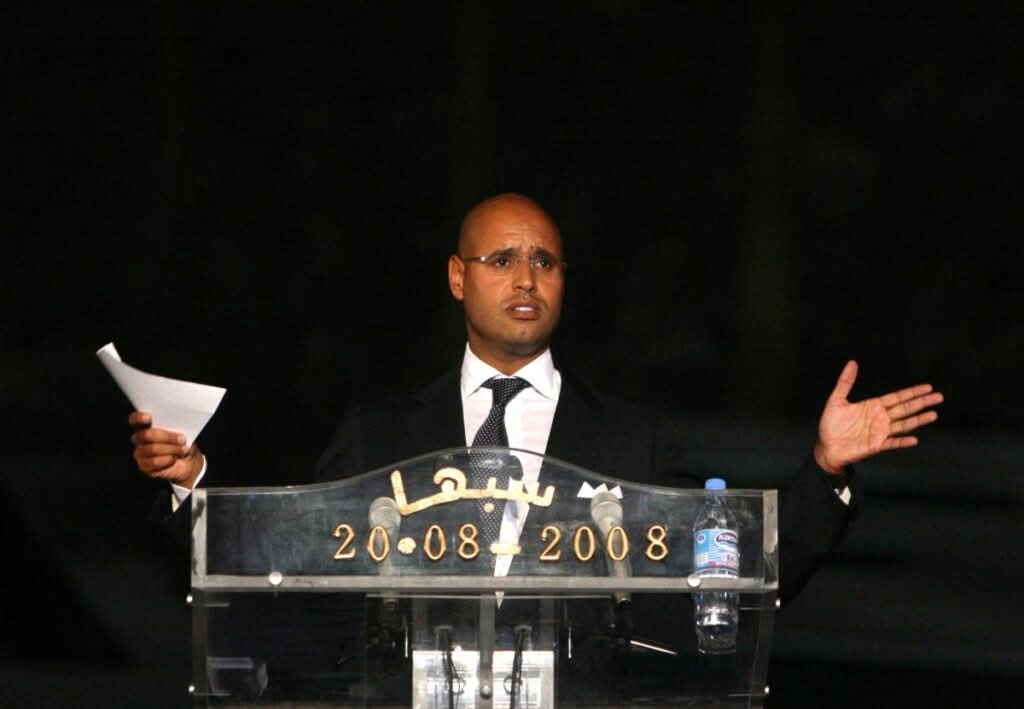
Seif al-Islam Kadhafi, son of Libya’s late longtime ruler, Muammar Kadhafi, has been killed by gunmen at his residence in western Libya, advisers and family members confirmed on Tuesday.
An adviser, Abdullah Othman Abdurrahim, told Al-Ahrar TV that Seif al-Islam was killed after four unidentified armed men stormed his home, disabled surveillance cameras and shot him. “Four armed men stormed the residence of Seif al-Islam Kadhafi after disabling surveillance cameras, then executed him,” Abdurrahim said.
Further confirmation came from his French lawyer, Marcel Ceccaldi, who told AFP that Seif al-Islam was killed by a “four-man commando” at his home in Zintan, northwestern Libya. Ceccaldi said the attackers’ identities were still unknown, adding that he had been informed about security concerns surrounding Seif al-Islam about ten days earlier.
Media reports said the killing occurred in Zintan, where Seif al-Islam, aged 53, had reportedly been living, although his whereabouts had remained largely unclear for years. His cousin, Hamid Kadhafi, told Al-Ahrar TV that he had “fallen as a martyr”.
Seif al-Islam had long been seen as a potential successor to his father and was considered a key political figure before the 2011 Arab Spring uprising. Although he held no formal government position, he was often described as Libya’s de facto prime minister and projected an image of reform and moderation, a reputation that later collapsed when he threatened “rivers of blood” against protesters.
In 2021, he announced his intention to run for president, but the elections were indefinitely postponed. His candidacy had remained controversial and divisive within Libya’s fragile political landscape.
He was arrested in November 2011 following a warrant issued by the International Criminal Court and was later sentenced to death by a Tripoli court in 2015 after a brief trial, though he was subsequently granted amnesty.
Libya expert Emadeddin Badi said Seif al-Islam’s death could reshape the country’s political dynamics, noting that it was “likely to cast him as a martyr for a significant segment of the population, while also shifting electoral dynamics by removing a major obstacle to presidential elections”.
Libya, rich in oil resources, has struggled to regain stability since the NATO-backed uprising that toppled Muammar Kadhafi in 2011. The country remains divided between a UN-backed government in Tripoli and a rival eastern administration backed by military strongman Khalifa Haftar.